
Bond-Building Treatments: Is Olaplex Worth the Hype?
If you have been anywhere near a hair salon, beauty blog, or Instagram feed in the past few years, you have heard of Olaplex. This bond-building treatment has become one of the most talked-about products in the hair care industry, with stylists and clients alike praising it as a game-changer for damaged hair. But with all the buzz, it can be hard to separate the facts from the marketing. At Sofia Loren Salon in Boca Raton, we have been using bond-building treatments since they first became available, and we have seen the results firsthand on hundreds of clients. Here is an honest assessment of what these treatments can and cannot do.
The Science of Hair Bonds
To understand what bond-building treatments do, you need to understand a little bit about hair structure. Each strand of hair is made primarily of a protein called keratin. The keratin molecules are held together by three types of bonds: hydrogen bonds, salt bonds, and disulfide bonds.
Hydrogen bonds are the weakest and are temporarily broken every time you wet your hair, which is why wet hair is more elastic and fragile than dry hair. They reform as the hair dries. Salt bonds are also relatively weak and are affected by changes in pH. Disulfide bonds are the strongest and most important for hair’s structural integrity. They are permanent bonds that give hair its strength, elasticity, and shape.
Chemical processes like coloring, bleaching, perming, and relaxing break disulfide bonds. Heat styling at high temperatures also damages them. Once these bonds are broken, the hair becomes weaker, more porous, and more prone to breakage. Traditional conditioners coat the outside of the hair to make it feel smoother, but they do not repair the internal bond damage. This is where bond-building treatments come in.
How Bond-Building Treatments Work
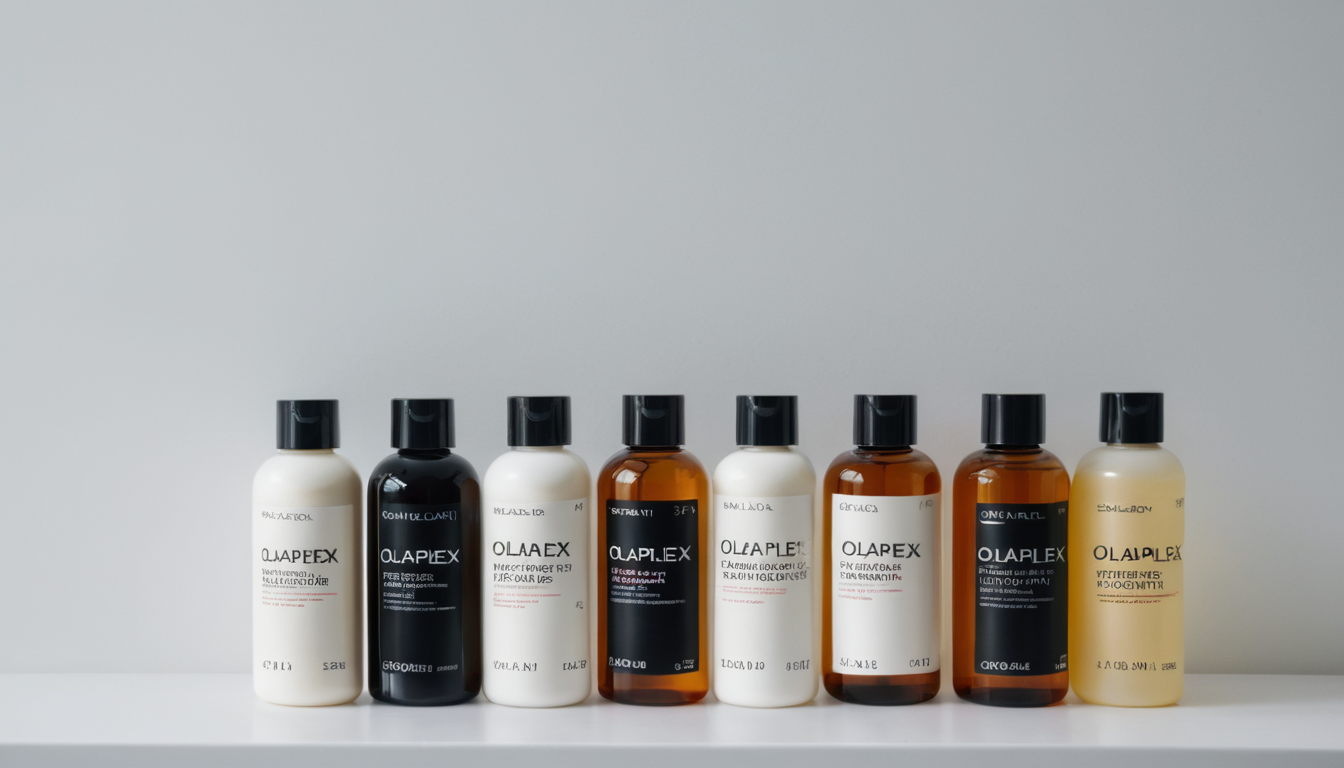
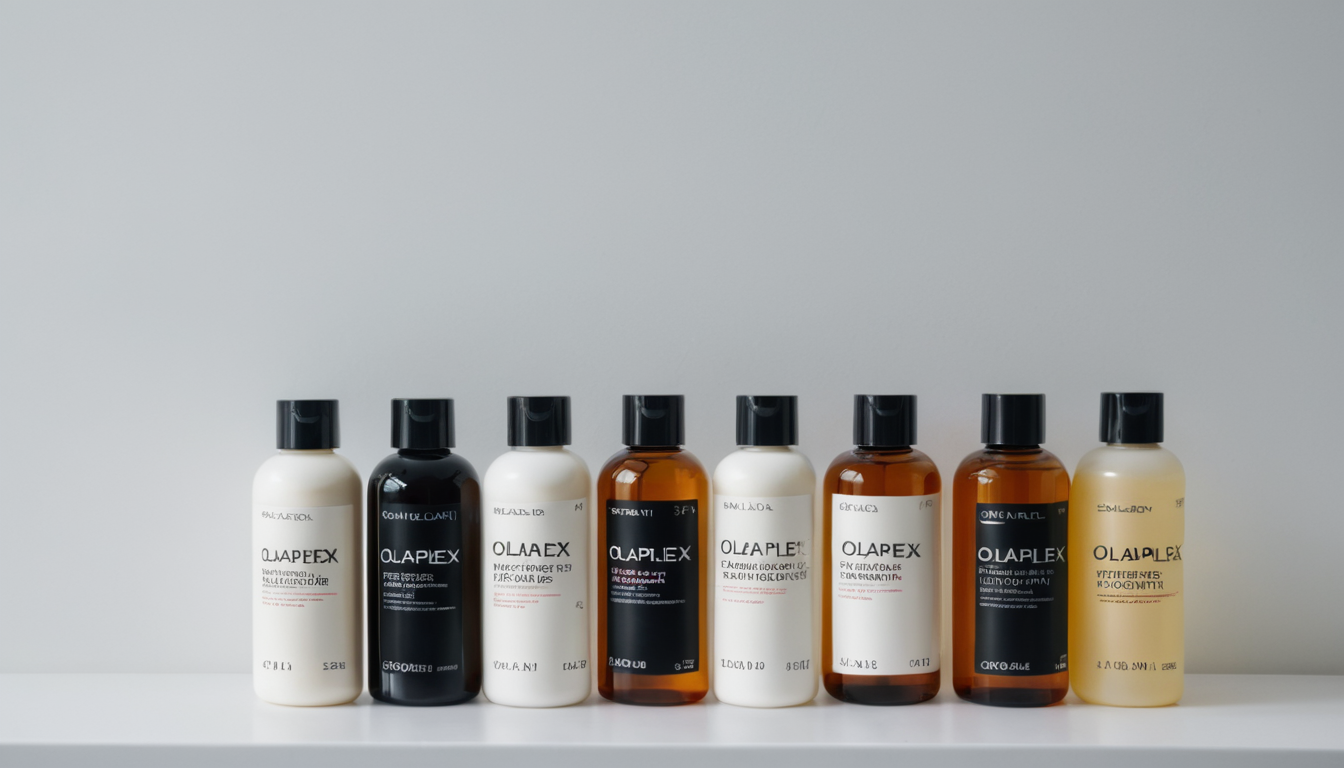
Bond-building treatments contain small molecules that can penetrate the hair shaft and reconnect broken disulfide bonds. The original and most well-known of these is Olaplex, which uses a patented active ingredient called bis-aminopropyl diglycol dimaleate. This molecule finds broken bond sites within the hair and creates a new link between them, effectively repairing damage at a molecular level.
This is fundamentally different from what conditioners, masks, and protein treatments do. Those products work on the surface of the hair, filling in gaps in the cuticle, coating the outside for smoothness, and depositing protein onto the hair to temporarily strengthen it. Bond-building treatments work inside the hair, on the actual structure that holds it together. The repair is more durable and more meaningful than surface-level conditioning.
Since Olaplex pioneered the category, several other brands have released competing bond-building products. While the specific active ingredients differ between brands, the basic principle is the same: small molecules that penetrate the hair shaft and reconnect broken bonds. Some of these competitors are excellent. Others are less effective. The quality varies, which is why professional guidance matters.
What Bond-Building Treatments Can Do
The effects of bond-building treatments are real and measurable. Hair that has been treated feels stronger, more elastic, and less prone to breakage. It holds color better because the repaired cuticle is less porous and releases pigment more slowly. It looks shinier because the smoother internal structure creates a more uniform surface for light to reflect off of. It tangles less, styles more easily, and generally behaves better.
For clients who color or lighten their hair, adding a bond-building step to the color service is one of the best investments you can make. When mixed into the lightener or color, the treatment protects the bonds from breaking during the chemical process, which means less damage is done in the first place. This is prevention rather than repair, and prevention is always more effective.
For hair that is already damaged, standalone bond-building treatments can restore a significant amount of strength and integrity. Many of our Boca Raton clients have seen dramatic improvements in their hair’s condition after a series of bond-building treatments, especially those whose hair has been stressed by a combination of chemical processing and our harsh South Florida sun.
What Bond-Building Treatments Cannot Do
It is important to be honest about the limitations of these treatments because the marketing can create unrealistic expectations. Bond-building treatments cannot make hair grow faster. They cannot reverse genetic hair loss. They cannot transform fine hair into thick hair or straight hair into curly hair. They repair existing damage; they do not change your hair’s fundamental characteristics.
There is also a ceiling on how much damage can be repaired. Hair that has been severely over-processed, lightened repeatedly to the point of feeling gummy or stretchy, may be beyond the point where bond-building alone can restore it. In these extreme cases, the structural damage is too extensive for the treatment to fully address, and the most honest recommendation may be to cut the most damaged portions and focus on protecting the new growth.
Bond-building treatments also do not replace the need for regular conditioning and moisture. They address the internal structure of the hair, but the external surface still needs hydration, smoothing, and protection from environmental factors. Think of bond-building as repairing the foundation of a house and conditioning as maintaining the paint and siding. You need both for the best results.
In-Salon vs. At-Home Treatments
Bond-building treatments are available in both professional, in-salon formulations and at-home retail versions. The in-salon treatments are more concentrated and more powerful. They are applied by your stylist, often in conjunction with a color or lightening service, and deliver the most dramatic results.
At-home treatments, like the popular Olaplex No. 3, are designed to maintain and extend the benefits of in-salon treatments between appointments. They are less concentrated than the professional versions but still effective at maintaining bond health over time. We recommend at-home treatments as a complement to professional services, not as a replacement for them.
The at-home application is straightforward. Apply the product to damp hair, work it through from roots to ends, and leave it on for at least ten minutes, though longer is better. Some of our clients leave it on for an hour or even overnight under a shower cap for maximum benefit. Then shampoo and condition as normal. Using an at-home bond builder once a week can make a noticeable difference in your hair’s strength and condition over the course of a few months.
Who Benefits Most
Virtually anyone can benefit from bond-building treatments, but some people see more dramatic results than others. Color-treated hair, particularly highlighted or bleached hair, benefits enormously because the lightening process breaks a significant number of disulfide bonds. Chemically straightened or permed hair benefits for the same reason. Heat-damaged hair from frequent flat iron or curling wand use sees improvement. And hair that has been stressed by environmental factors, including the sun, chlorine, and salt water that are part of daily life in South Florida, responds well to bond repair.
If your hair is in good condition and you do not color, heat-style, or expose it to harsh environmental conditions, you may not notice a dramatic difference from bond-building treatments because there are fewer broken bonds to repair. In that case, your money is better spent on quality conditioning products that maintain the health you already have.
Book Your Appointment at Sofia Loren Salon
Ready to experience the difference a bond-building treatment can make for your hair? Visit Sofia Loren Salon in Boca Raton for a professional assessment and customized treatment plan. Our team will evaluate your hair’s condition and recommend the best approach for restoring strength, shine, and resilience. Call us at (561) 444-0720 or book online at sofialorensalon.com.